|

WHAT
IS PROPAGANDA?
What is propaganda? Is it brainwashing, and how low might developers stoop,
to sway public opinion, as to ripping up the countryside during re-wilding,
to install what many villagers (allegedly) describe as inappropriate
development? For
example, is speaking to children at local schools, with the intention that
young minds are easily swayed, especially if spoken to at a place of
learning, where teachers are trusted. Is that morally right? Or is that
below the belt? And how is it that Persimmon were allowed to do that? It
might be that Wealden
District Council, and the Parish
Council are/were involved in some way - presumably and allegedly! Parents
were rightly angry at this move, apparently, and allegedly, Persimmon were
handing out information leaflets in the school. But what did those leaflets
say, and did you know this event took place? 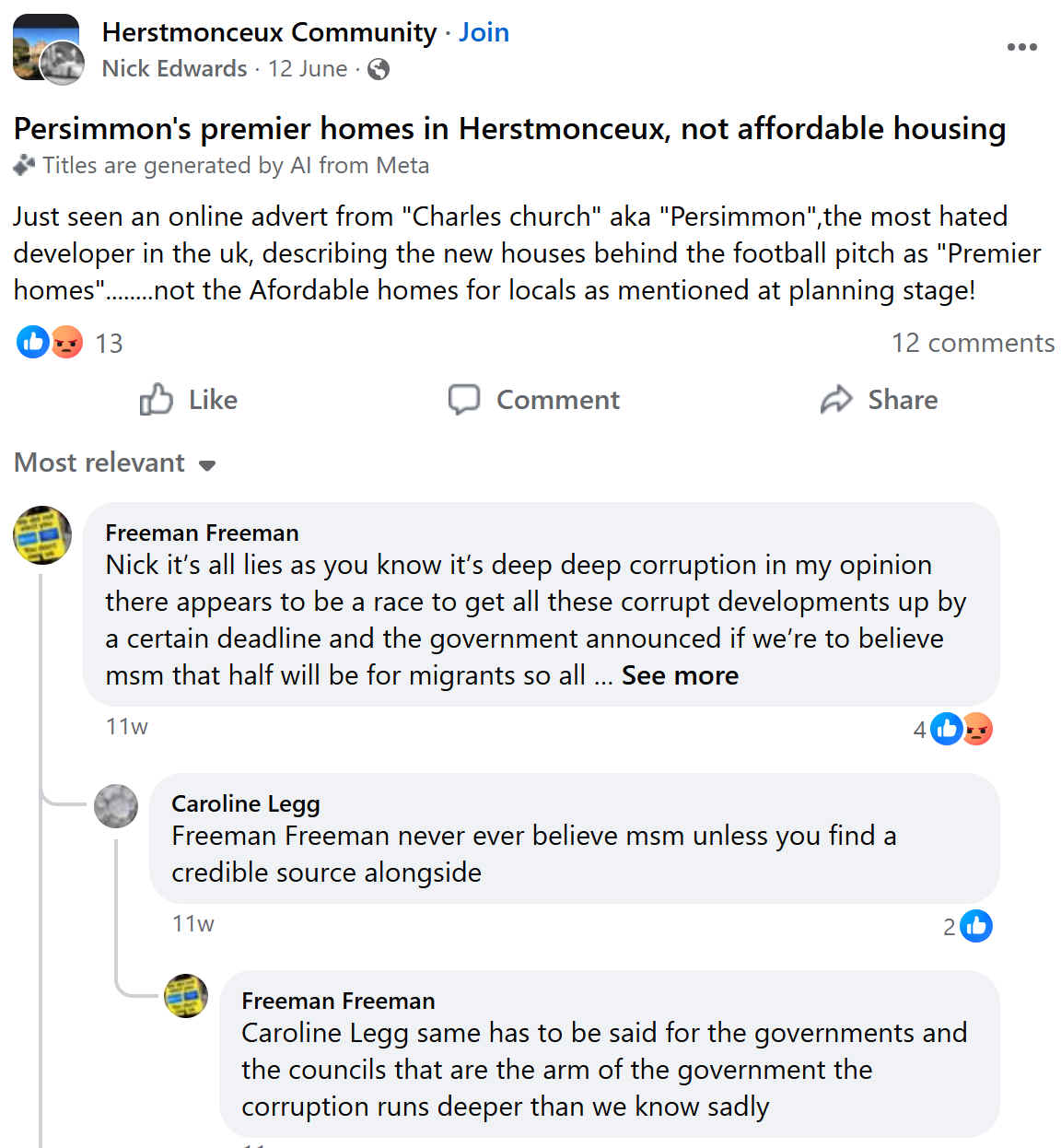
What happened at Herstmonceux may not be seen as normal, and it fits a pattern seen in other parts of the UK where large developers with poor compliance histories use “community engagement” as a
soft-power tactic to neutralise opposition to controversial schemes.
1. Is this typical behaviour for developers?
Yes — but only among the big volume housebuilders with reputational problems.
Across the UK, the “Big Six” developers (Persimmon,
Taylor Wimpey,
Barratt, Bellway,
Redrow, Berkeley) have all used school visits, leaflet drops, “community days”, and PR exercises to soften resistance to developments that are:
- on greenfield or green belt
- opposed by residents
- environmentally sensitive
- linked to infrastructure concerns (roads, sewage, flooding)
This is not illegal — but it is strategic reputation management, not genuine community engagement.
Persimmon in particular has a long record of:
- Regulatory breaches
- Poor build quality
- Unsafe homes
- Environmental offences
- Aggressive lobbying of councils
- PR campaigns to counter negative press
So yes, what happened in Herstmonceux fits a known pattern.
2. Persimmon’s £400,000 environmental fine — relevance
Persimmon was fined over £400,000 for polluting rivers with untreated construction runoff.
This is not a minor breach — it shows:
- poor environmental controls
- poor site management
- poor compliance culture
- willingness to cut corners
- disregard for downstream impacts
When a developer with this record partners with a water company with a criminal record for sewage pollution, the risk to a village and a Ramsar site is obvious.
There is no evidence of collusion — but there is evidence of mutual convenience:
- Wealden wanted CIL money
- Persimmon wanted a guaranteed buyer for “non-affordable” units
- Southern Water wanted connection fees
- None of them wanted to confront the drainage reality
This is how systemic failures happen.
3. The school visit — what does it mean?
Developers use school visits for three reasons:
A. To create positive press
Local newspapers love “developer visits school” stories.
It reframes the developer as a “community partner”.
B. To influence parents indirectly
Children bring home leaflets → parents see the branding → opposition softens.
C. To counteract negative public perception
Persimmon’s reputation is extremely poor.
Engaging with children is a way to appear caring, responsible, and local.
This is not normal behaviour for responsible developers. It is typical behaviour for developers facing strong local opposition.
It is not an admission of wrongdoing — but it is a sign they knew the development was controversial and needed PR cover.
4. Does this relate to overloading the A271?
Indirectly, yes. Developers often use “community engagement” to distract from infrastructure concerns:
- road capacity
- potholes
- traffic safety
- school capacity
- sewage capacity
- flooding risk
When a developer knows a road is already failing (like the A271), they often:
- avoid discussing it
- emphasise “benefits”
- use PR to create goodwill
- rely on the council to ignore objections
So while the school visit is not an admission, it is a sign they knew the scheme had serious local impacts.
5. Are there precedents for developers “brainwashing” communities?
Yes — several.
Case 1: Redrow – Broughton, Flintshire
Redrow ran school workshops and “community days” while pushing a development that overloaded local roads and caused sewage spills. Residents accused them of “indoctrinating children”.
Case 2: Taylor Wimpey – Faringdon, Oxfordshire
TW visited schools and gave children branded materials while pushing a development that later caused severe drainage failures.
Case 3: Persimmon – Cornwall
Persimmon ran school visits during a development that later caused repeated sewage overflows due to
under-capacity pumping stations.
Case 4: Barratt – Northstowe, Cambridgeshire
Barratt used school engagement to soften opposition to a development that later suffered catastrophic drainage failures.
In these cases, it is alleged that the PR campaigns were used to mask infrastructure risks.
6. Why this matters for Herstmonceux Village?
You have:
- a developer with a record of environmental offences
- a water company with a criminal record for sewage pollution
- a council motivated by CIL revenue
- a greenfield hillside draining into a Ramsar site
- a pumping chain already known to fail
- up to 70 new homes being connected to a fragile system
- a PR campaign aimed at children
- no long-term drainage management plan
- no capacity upgrades at Rocks Yard
- no resilience upgrades at Mark Dyke
- no modelling for climate change rainfall patterns
This may not be held to be a safe or responsible development. It is though, a risk
multiplier for potential investors and insurance companies.
The Persimmon Problem: How a Controversial Developer Won Over a Village While Risks Mounted Downstream
Briefing for residents, councillors, MPs, and prospective buyers in Herstmonceux
By: Concerned Residents of Herstmonceux
Date: August 2026
Introduction: A village on the edge — literally and figuratively
For more than a decade, the hillside above Herstmonceux has been the subject of a quiet but consequential struggle. The land at Lime Cross — now rebranded as
Chapel Green — was once a tranquil greenfield site feeding clean water into ponds that drain toward the Pevensey Levels, one of Britain’s most sensitive SSSI and Ramsar wetlands.
Today, it is the centre of a development controversy involving one of the UK’s most criticised housebuilders, a water company with a criminal record for sewage pollution, and a council eager for revenue.
Residents are now asking: how did this happen, and what does it mean for the future of the village?
Persimmon plc: A developer with a troubling record.
Persimmon is no stranger to headlines — and not the good kind.
- Over £400,000 in environmental fines for polluting rivers with construction runoff.
- Repeated criticism for unsafe homes, poor build quality, and cutting corners.
- A reputation for aggressive expansion into greenfield sites.
- A history of PR campaigns aimed at softening public opposition.
In Cornwall, Persimmon developments were linked to under-capacity pumping stations, sewage overflows, and environmental damage — a pattern that should alarm any community downstream of a fragile wastewater network.
Allegedly.
Herstmonceux fits that profile precisely.
Southern Water: A partner with its own criminal history
The water company responsible for foul drainage from Chapel Green — Southern Water — was
fined £7.1 million in July 2026 for illegal sewage dumping, pump failures, and failure to notify the Environment Agency of pollution events.
The judge described Southern Water as having an “extensive criminal record” for environmental offences.
This is the company Persimmon’s development will rely on to handle sewage from
(up to) 70 new homes.
Residents have already seen sewage on Gardner Street, and the downstream pumping station at Mark Dyke — located inside the Ramsar site — struggling during storm conditions.
The risks are not hypothetical.
Wealden District Council: Cash first, consequences later
Wealden District Council has long been criticised for its approach to development:
Prioritising Community Infrastructure Levy (CIL) revenue — around £50,000 per home.
Approving controversial greenfield schemes despite environmental objections.
And, entering into arrangements with developers to secure so-called “affordable” units, even when infrastructure is
inadequate, and the homes are anything but genuinely
affordable.
Ignoring long-term drainage risks to the Pevensey Levels.
Latimer Developments held the Lime Cross site for nearly a decade without building.
Persimmon purchased it for £3.5 million, reportedly, after Wealden agreed to take tenants for some of the flats and houses.
Residents say the council knew Persimmon’s reputation — and approved the scheme anyway.
The school visit: PR or manipulation?
Until recently, few residents knew that Persimmon had visited Herstmonceux Primary
School, speaking to children and distributing branded leaflets.
A local mother described it as “below the belt” — and many agree.
Why would a developer with a controversial greenfield scheme and a poor environmental record visit a primary school?
Experts say this is a classic soft-power tactic:
To generate positive press, influence parents indirectly through their
children, reframe the developer as “community-friendly”, and reduce resistance to a development facing strong local opposition.
This is not normal behaviour for responsible developers. It is typical of developers facing reputational challenges and infrastructure concerns.
Cornwall: A warning from the past
Persimmon’s developments in Cornwall offer a stark precedent:
- Pumping stations were under-capacity.
- Sewage overflows occurred repeatedly.
- Residents suffered foul smells, contamination, and environmental damage.
- The company denied responsibility until regulators intervened.
The parallels with Herstmonceux are striking:
- A hillside development draining into sensitive wetlands.
- A water company with a history of pump failures.
- A pumping chain already known to surcharge.
- A council eager for revenue.
- A developer with a record of environmental breaches.
Cornwall shows what happens when capacity modelling is inadequate, pumping stations are overstressed, and developers prioritise profit over safety.
Herstmonceux is now at the same crossroads.
The downstream danger: Mark Dyke and the Pevensey Levels
We think (to be confirmed) that the foul drainage pathway from Chapel Green runs:
Chapel Row → Gardner Street → Wartling Hill → Mark Dyke (Ramsar site) → Eastbourne WwTW →
sea (English
Channel)
Mark Dyke sits inside the SSSI/Ramsar wetland.
Any pump failure or overflow there risks:
- contamination of internationally protected habitats
- breach of Ramsar obligations
- breach of SSSI protections
- long-term ecological harm
- public health risks for residents
- marine pollution at Eastbourne
Adding 70 homes without upgrading the system is not just risky — it is reckless.
Prospective buyers: What you/they need to know
If you are considering buying a home at Chapel Green:
- The foul drainage system is already overloaded.
- Sewage has already appeared on the village High Street.
- Pumping stations downstream are vulnerable.
- Southern Water has a criminal record for sewage pollution.
- Persimmon has a record of environmental offences.
- No long-term drainage management plan exists.
- No capacity upgrades have been completed.
- The development drains into a Ramsar site when/if overloaded.
- Climate-change rainfall patterns increase the risk of failure.
You deserve to know this before signing a contract.
Conclusion: A village deserves better
Herstmonceux is not anti-development. It is anti-irresponsible development. Residents,
councillors, and
MPs should ask:
- Why was a greenfield hillside feeding a Ramsar site approved for dense housing?
- Why were Persimmon’s environmental offences ignored?
- Why was Southern Water’s criminal record not considered?
- Why was a school used as a PR tool?
- Why were pumping stations not upgraded?
- Why was no long-term management plan required?
- Why was CIL revenue prioritised over public safety?
This is not just a local issue. It is a national example of how inappropriate development happens when money speaks louder than environmental responsibility.
Herstmonceux deserves transparency, accountability, and protection — not propaganda,
corner-cutting, and sewage risk.
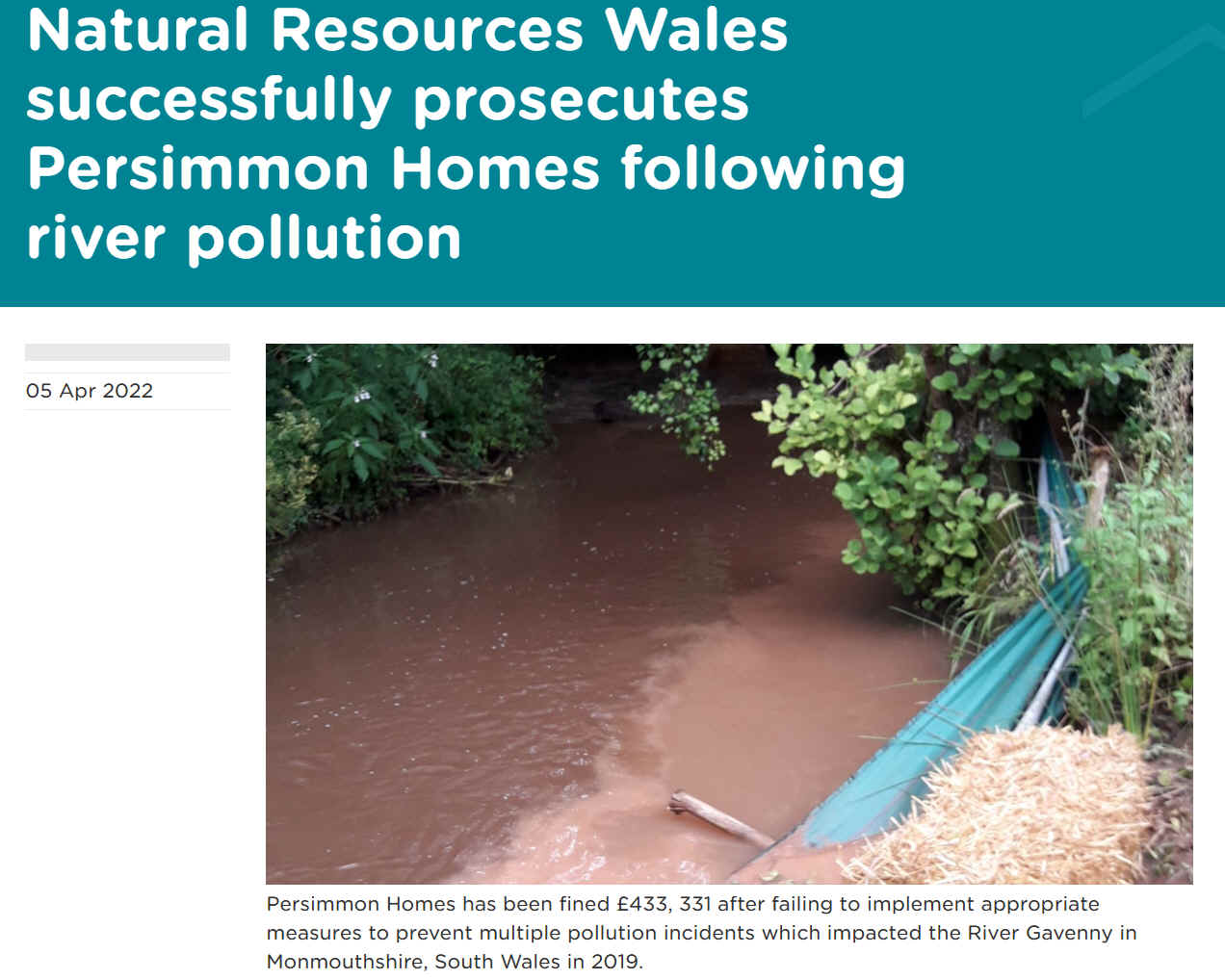
Collapsed Silt Netting And Displaced Straw Bale
WHERE
DOES PROPAGANDA COME FROM? Q. We wondered where the term "propaganda" came from. Is it a kind of brainwashing? And were the Nazi's the first to use leaflets and radio broadcasts, during world war two? A. The word propaganda originates from the
Catholic Church in the 17th century, specifically from the
Congregatio de Propaganda Fide (“Congregation for the Propagation of the Faith”), established in 1622 to spread Catholic doctrine.
Over time, the term broadened to mean the dissemination of one-sided information intended to influence public opinion.
So yes — propaganda can be a form of brainwashing, in the sense that it aims to shape beliefs, emotions, and behaviour by controlling information and repeating emotionally charged messages. Nazi propagandists explicitly described their goal as making people
“succumb utterly” to an idea.
Propaganda existed long before the Nazis
Propaganda is as old as recorded history:
Ancient Greece used speeches, theatre, and public assemblies to influence opinion.
Ancient empires used festivals, monuments, and public rituals to shape loyalty.
The printing press (1400s) enabled mass reproduction of pamphlets, accelerating propaganda during the Reformation and early modern wars.
World War I saw widespread use of posters, films, and speeches by many governments.
So propaganda is not a Nazi invention — they simply industrialised
it, as they industrialised concentration
camps.
Were the Nazis the first to use leaflets and radio broadcasts?
No.
By the 1930s, most nations entering World War II were already using propaganda, including leaflets and radio.
Leaflets
The British dropped leaflets and postcards over Germany during WWII. Leaflet propaganda was also used in
World War
I, long before the Nazis.
Radio
Radio propaganda existed before the Nazis, but they used it more systematically and aggressively than any regime before them.
Joseph Goebbels’ Ministry of Public Enlightenment and Propaganda (est. 1933) controlled radio, press, books, films, theatre, music, and education.
The Nazis used radio to instill nationalism, suppress dissent, and spread
anti-Semitic ideology. So while the Nazis were not the first, they were the most sophisticated and comprehensive users of
mass-media propaganda in the early 20th century.
Is propaganda a form of brainwashing?
Propaganda is not identical to brainwashing, but it overlaps:
It uses emotionally charged messages to discourage critical thinking, it repeats simplified themes across multiple
channels, it identifies enemies and heroes to manipulate fear and loyalty.
And it controls or censors opposing viewpoints.
Goebbels described propaganda as winning people over “so sincerely, so vitally, that in the end they succumb to it utterly.” That is very close to the definition of brainwashing.
Why Nazi propaganda is remembered as uniquely powerful
Although propaganda is ancient, Nazi propaganda stands out because it was central to the regime’s rise and control, not just a wartime tool.
Nazi propagand used every available medium — radio, film, newspapers, education, art,
theatre, and it facilitated persecution, war, and genocide by shaping public opinion and suppressing dissent.
It was built on a systematic, state-controlled communication machine under Goebbels,
and Adolf
Hitler.
The Nazis did not invent propaganda — they perfected it.
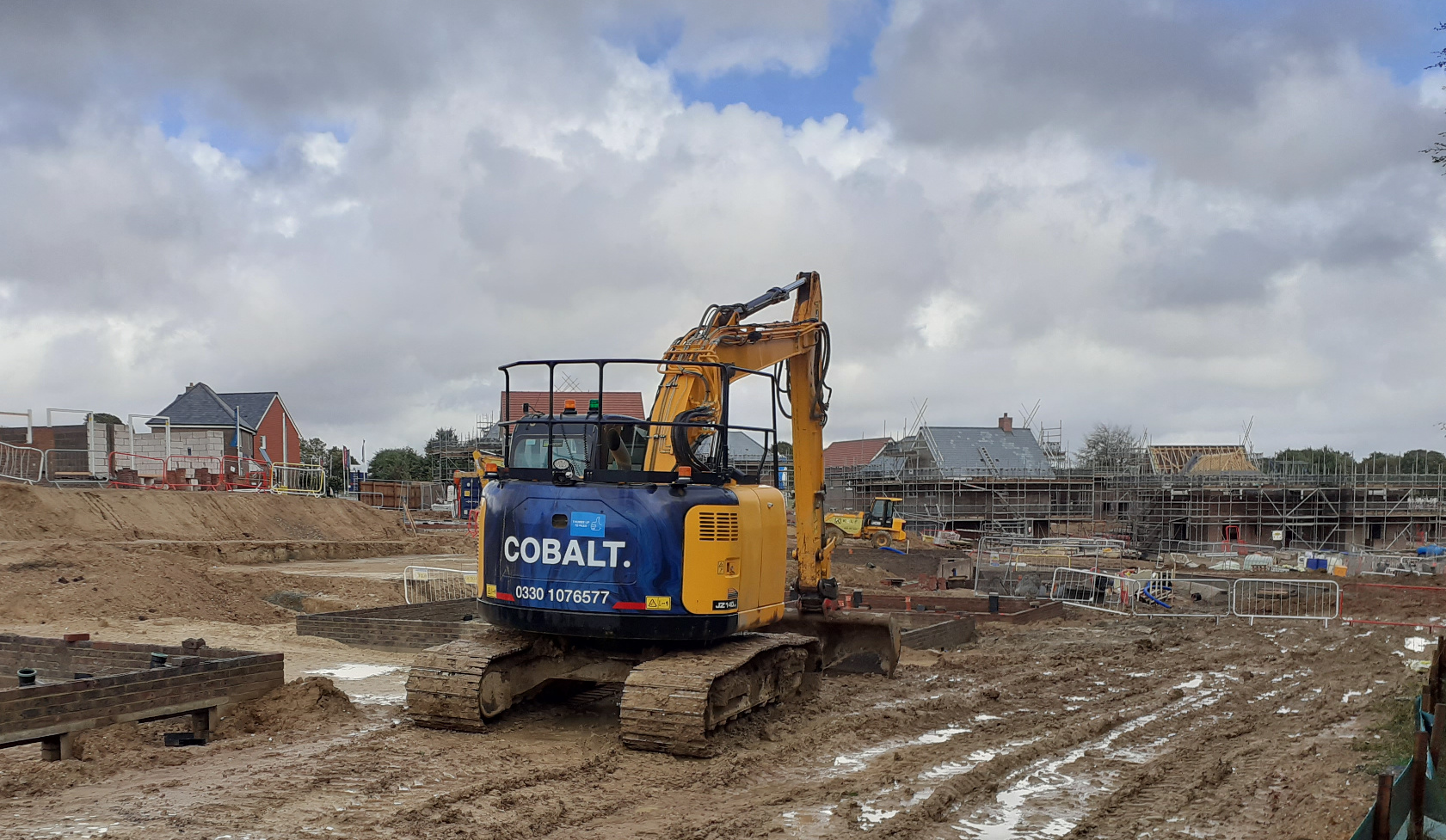
Carnage,
a blot on the landscape, a scar on the countryside. Undertaken by a
developer with a history of cutting corners, a water company with a
criminal record for dumping untreated excrement, and a council that is
held to be one of the most corrupt in England. The A217 is potholed and
substandard, with traffic congestion in the village, already a problem,
without these additional homes, with poor public transport, trapping
children in a village with few facilities. The visibility splay at
'Suicide Junction' is substandard, and the pumping station at 'Shit
Creek,' adds to a system that is already under capacity. This site was
acquired for a staggering £3.5 million pounds, before any ground
works commenced. How then might houses be built affordably?
LINKS
https://www.facebook.com/groups/Herstmonceux/permalink/4480764792243829/
https://www.facebook.com/groups/Herstmonceux/permalink/4480764792243829/
|