
Is
your newbuild home fireproof as standard, or at risk from climate
change? Would you believe, that in Wealden, an enforcement officer named
David Phillips, prided himself of ridding the area of mobile homes. Why?
Because his council did not want cheap housing. They wanted housing they
could charge for council tax for, and an elite society, where executive
homes are the norm. No though at all for climate change that is causing
global warming.
A PLAN BORN FROM EXPERIENCE, NOT THEORY
The architect of this proposal is not an academic. He is a builder who became a planning consultant, who fought councils in appeals and won. He has seen how modular housing can meet planning standards, how councils can be compelled to act, and how land can be used more intelligently.
His three appeal victories are proof that the system can change — and that modular housing is not a fringe idea, but a viable alternative to the slow, carbon-heavy methods Britain has relied on for too long.
A CHANCE TO RETHINK WHAT HOUSING IS FOR
Britain’s housing crisis has been treated as an inevitability — a slow-burning emergency that must be managed rather than solved. But this six-year plan suggests something different: that the crisis is not inevitable, and that the tools to fix it already exist.
A not-for-profit national modular housing programme would not only provide homes. It would provide stability, dignity, and opportunity. It would reduce carbon emissions, cut waiting lists, and give councils the ability to plan rather than firefight.
Most importantly, it would prove that housing does not need to be a speculative asset. It can be a public good.
And in a country where millions are waiting for a place to call home, that shift in thinking may be the most important part of all.
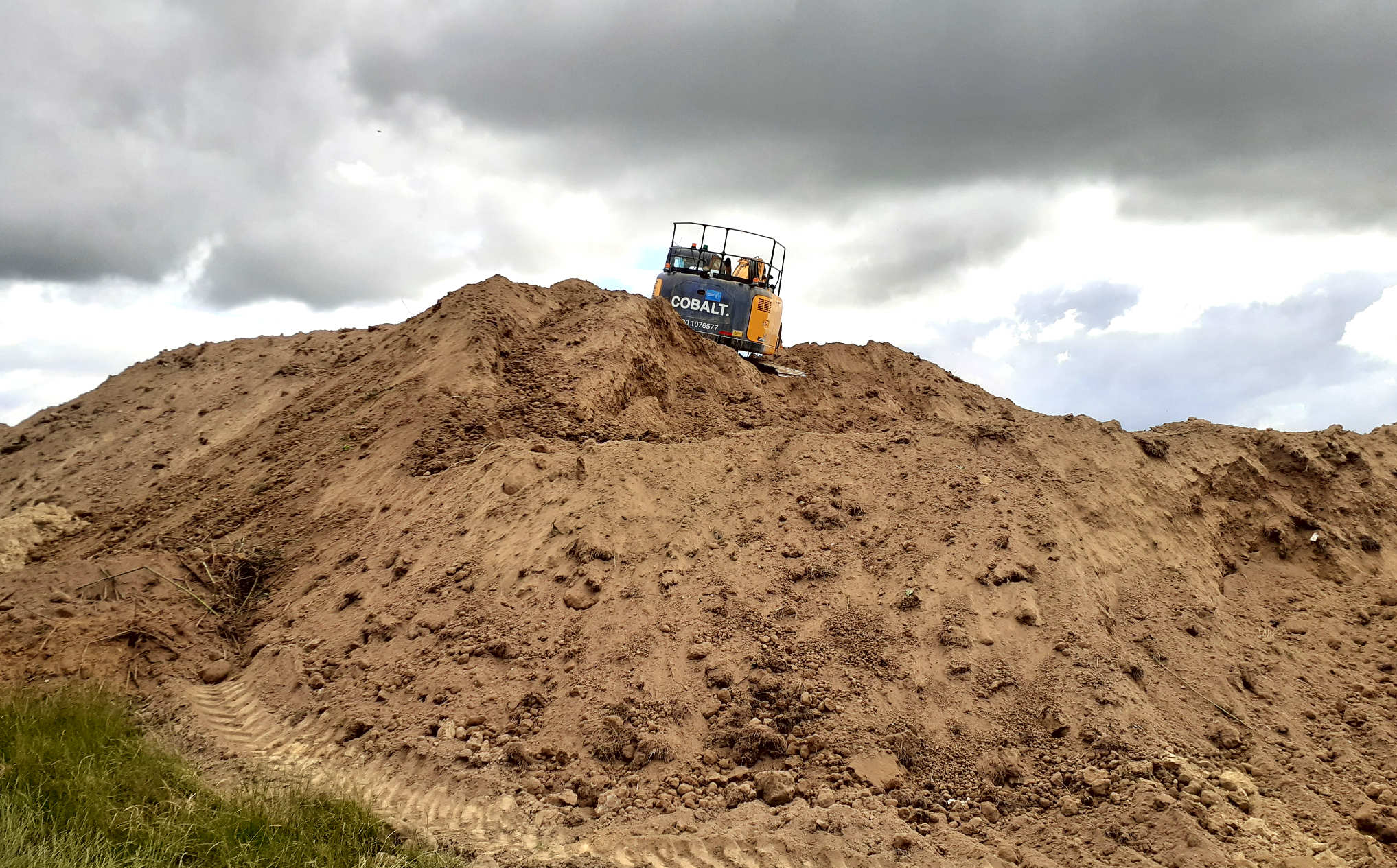
Earth
mountains, and moving earth around a building site, represents a high
carbon footprint, that adds to drought, climate change, and the cost of
the houses being built. This development at Herstmonceux by Charles
Church and Persimmon homes, at Chapel Green, is questionable. Not only
that, but the water for these new build sites is being pumped in from
Bewl Water in Kent, by South East and Southern Water.
THIS
SUMMER, EUROPE BURNED
Wildfires swept across Greece, Spain, Italy, and even the UK’s own heathlands. Homes were lost. Lives were disrupted. And once again, we were reminded that climate change is no longer a distant threat — it is here, reshaping the way we live.
But what if Britain’s housing crisis and the climate crisis could be tackled together?
What if the homes we build could protect us from extreme heat, reduce our carbon footprint, cut water waste, and end
council waiting lists — all at the same time?
This is the vision behind Project WILDFIRE.
A six-year national plan to build 4.6 million low-carbon modular homes, designed not for profit, but for resilience. Homes that reflect heat, generate their own power, collect their own water, and treat their own
waste. Homes that help Britain adapt to a hotter, drier, more unpredictable world.
And it all starts with a simple idea: Build smarter. Build faster. Build sustainably.
A
Six-Year Plan to End Britain’s Housing Crisis — Without Profit, Without Delay
Britain’s housing crisis has become a generational wound. Rents are rising faster than wages, council waiting lists stretch into the tens of thousands, and young families are priced out of the very communities they grew up in. For decades, governments have promised to fix the problem. For decades, the problem has grown.
But a new proposal — conceived not by a think-tank or a political strategist, but by a former builder and planning consultant — suggests the crisis could be solved far faster than anyone in Westminster has dared to imagine. And crucially, it could be done without profit extraction, using a model closer to environmental charities than commercial developers.
The plan is simple, radical, and grounded in real-world experience. This consultant has already won three planning appeals for
low-cost modular housing against a council that repeatedly failed to meet its statutory housing targets. He has seen, first-hand, how the planning system can be navigated — and how it can be changed.
His proposal: a six-year national programme of rapid-build modular homes, delivered on land acquired through compulsory purchase at capped values, and sold at prices that fall over time as early revenue is reinvested. The aim is not profit. The aim is homes — built quickly, affordably, and with a fraction of the carbon footprint of traditional construction.
The numbers are startling
Under the model, each modular home — including land — costs £101,200 to build. With a £39bn starting budget, the programme can deliver 385,000 homes every six months. In the first two years, homes are sold at £202,200, generating enough surplus to fund the next wave of construction.
By the end of year two, Britain would have 1.5 million new homes — the entire target promised by government — delivered in a quarter of the time.
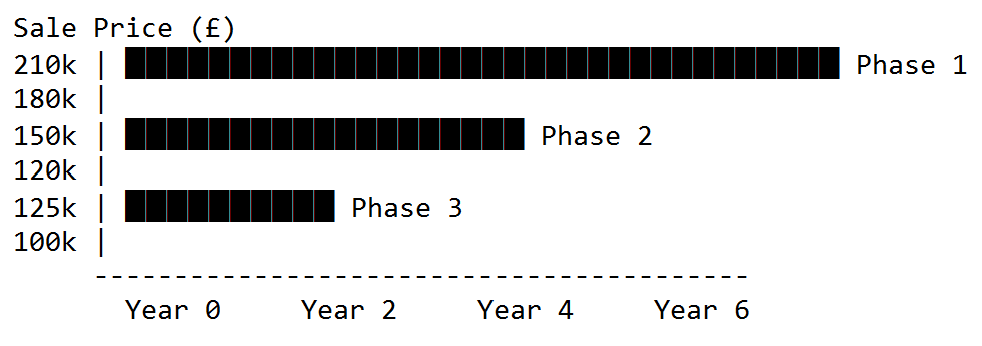
From year two to year four, sale prices fall to £150,000. From year four to year six, they fall again to £125,000. The programme remains financially self-sustaining throughout.
By the end of year six, the UK would have 4.62 million new homes — enough to eliminate council waiting lists entirely and create a surplus of affordable housing that stabilises rents and house prices for a generation.
A different kind of housing programme
What makes this proposal unusual is not just the speed or the scale. It’s the ethos.
The model is explicitly not-for-profit, inspired by organisations like the Climate Change Trust, which operate on reinvestment, transparency and public benefit rather than shareholder returns. In this housing plan, every pound is recycled into the next build cycle. No dividends. No extraction. No speculative land banking.
It is, in effect, a national public utility for housing — but one built with modern manufacturing, not Victorian bureaucracy.
Why modular homes matter
Modular homes have long been misunderstood in Britain, dismissed as temporary or inferior. But the technology has moved on. In
Scandinavia,
Japan and
Germany, modular homes are permanent fixtures — warm, efficient, and built to last.
Factory construction reduces waste by up to 90%, cuts carbon emissions dramatically, and allows homes to be erected in days, not months. For a country committed to net-zero, modular housing is not a compromise. It is an opportunity.
And for councils struggling with homelessness, temporary accommodation costs, and spiralling demand, it is a lifeline.
And a way to reduce council taxes, if undertaken intelligently.
The land problem — and the solution
Britain’s housing crisis is not just about construction. It is about land.
When farmland or greenbelt is reclassified for development, its value can increase a hundredfold. This speculative windfall is baked into the price of every new home. It is a transfer of public value into private hands — and it is one of the reasons homes are so expensive.
The proposed model caps land values at £12,000 per acre, acquired through compulsory purchase. Each acre provides ten homes. The land cost per home is just £1,200.
This single intervention breaks the cycle of speculation and makes affordable housing economically viable at scale.
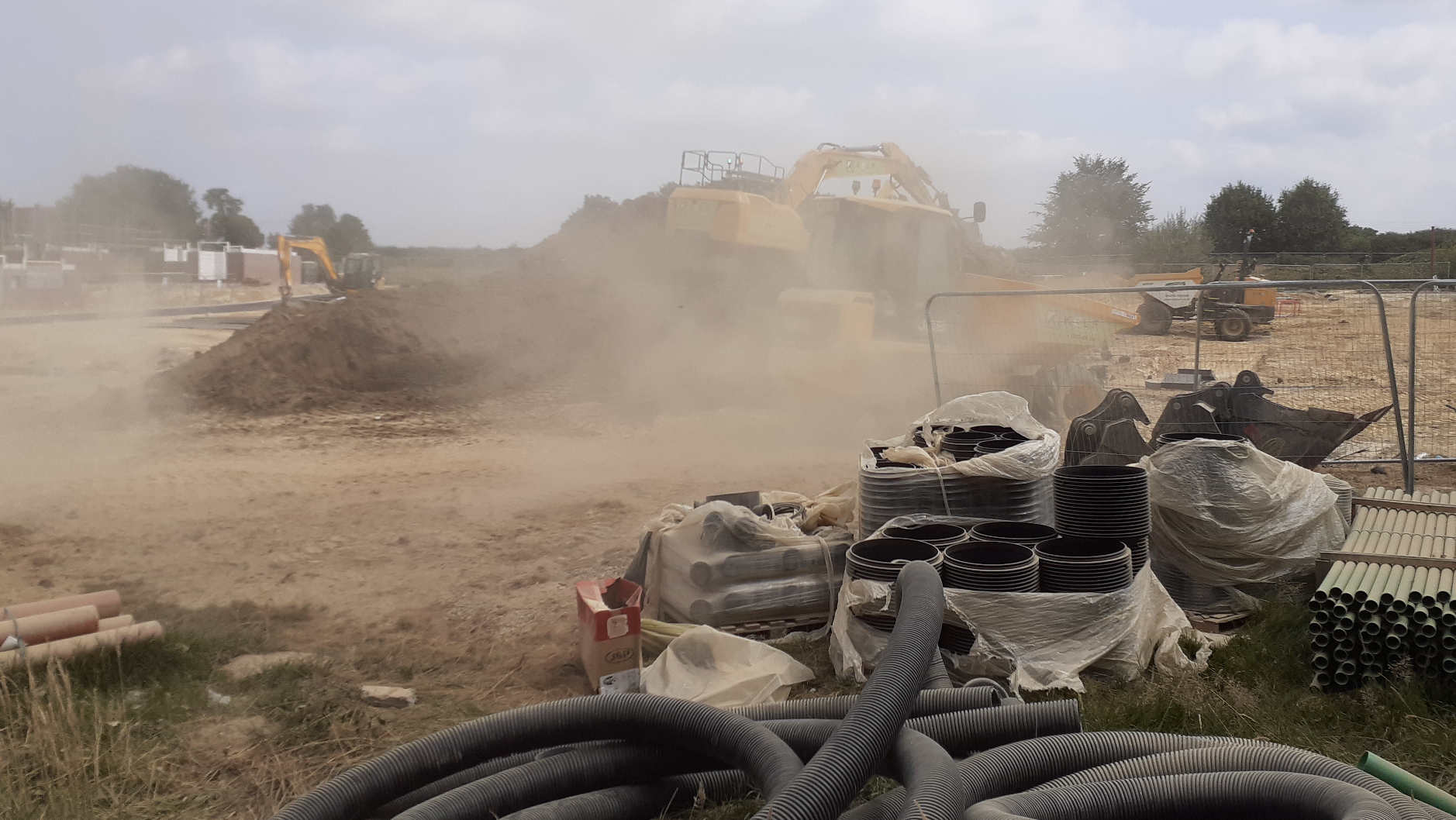
Dusty
or what. 18 July 2026, clouds of dust contaminate Chapel Green,
Herstmonceux.
It's
more than just a nuisance.
It takes balls for (otherwise corrupt) councils to purchase land for low
cost housing, when the farmers who own the land, own the Parish
and District Councillors, via their contacts on committees who dole out the
planning permissions. Sylvia Tidy was one such example, a farmer's wife
(allegedly) who was a member on East
Sussex County Council, and before that, Wealden
District Council's area plans south planning committee.
The
UK Government simply does not have the guts to force councils to buy up
land for social housing, because the British system relies on cronyism,
allegedly. They don't want to upset the local farmers who own the land.
How
then to get 1.5 million new houses built? Sir
Keir Starmer's and now Andy
Burnham's dreams. That is the burning question,
and it will require a change in the law. It will require Reform, on a
scale that only Sir Winston Churchill had the political balls to
implement after World War
Two. It will require politicians who do not have their hand in
property developer's pockets, looking for handouts, gifts and other
donations. And that is the real hurdle. Finding an honest member of
parliament. A member more interested in getting things done, instead of
talking about it with a forked tongue. And any prime minister who allows
councils to raise taxes by 160%, is not a man to be trusted to run the
country, our view, protected by Articles 9 and 10 of the HRA 1998. Such
a move is tantamount to defeat. Admitting he has no other plan, that to
squeeze the electorate until they a dried prunes.
Another
example of how not to do it, is the development at Chapel
Green, that is
using diesel powered earth movers to pile earth high in artificial
mountains all over the site. This agenda raises the carbon footprint of
the development significantly, and is a questionable practice.
WHITE PAPER
A Six-Year National Strategy for Zero-Carbon, Low-Cost Modular Housing in the United Kingdom
A Proposal for Ending Council Housing Waiting Lists and Reducing the UK’s Carbon Footprint
Executive Summary
The United Kingdom faces a structural housing crisis driven by inflated land values, slow construction methods, and a planning system unable to deliver homes at the speed and cost required. This White Paper proposes a
six-year national housing programme based on:
Compulsory purchase of land at capped values (£12,000 per acre)
Rapid-build modular (“flatpack”) homes costing £101,200 per unit
A phased pricing model that begins with higher sale prices to build capital, then reduces prices over time
A not-for-profit delivery model inspired by the Climate Change Trust’s operational ethos
A proven planning strategy conceived by a former planning consultant who has already won three appeals for
low-cost modular housing against a council unable to meet its targets
This programme delivers 4.62 million homes in six years, eliminates council waiting lists, stabilises rents, and dramatically reduces the carbon footprint of UK housing construction.
1. Background and Rationale
1.1 The UK’s structural housing failure
The UK’s housing shortage is not simply a matter of insufficient construction. It is the result of:
- Land speculation inflating prices beyond productive value
- Slow, carbon-intensive brick-and-mortar construction
- Planning bottlenecks that favour large developers over rapid-build innovation
- Councils unable to meet statutory housing targets
1.2 A proven alternative
This White Paper is based on a model developed by a former builder and planning consultant who successfully won three planning appeals for
low-cost modular housing. These appeals demonstrated:
Councils can be compelled to accept modular housing
Modular housing meets planning and building standards
Costs can be kept low and predictable
Land use can be optimised to deliver 10 homes per acre
This real-world experience forms the foundation of the national model proposed here.
2. The Economic Model
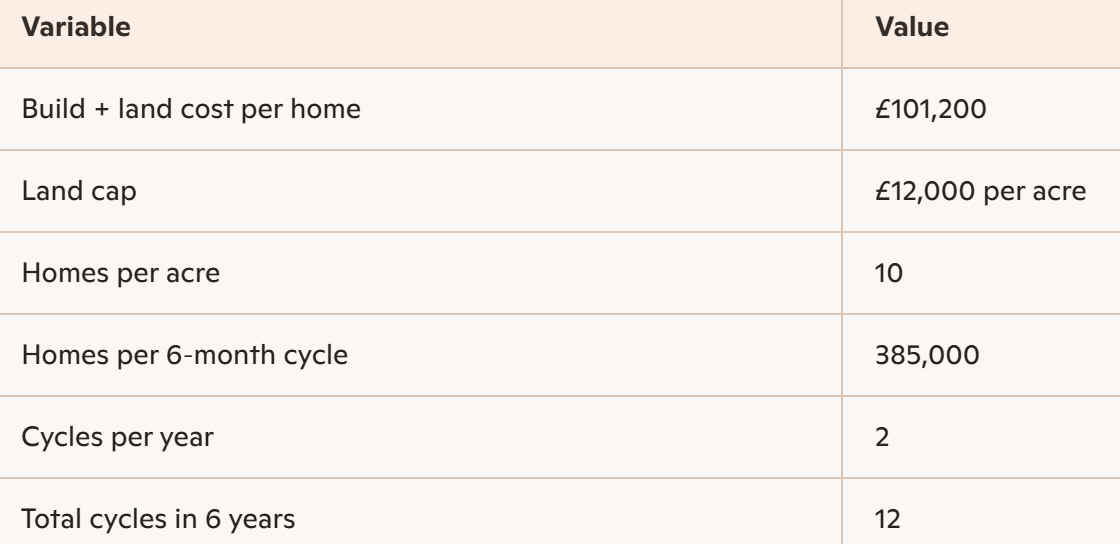
2.1 Core assumptions
Variable and Value
Build + land cost per home = £101,200
Land cap = £12,000 per acre
Homes per acre 10 (minimum)
Homes per 6-month cycle = 385,000
Cycles per year = 2
Total cycles in 6 years = 12
3. The Three-Phase Pricing Strategy
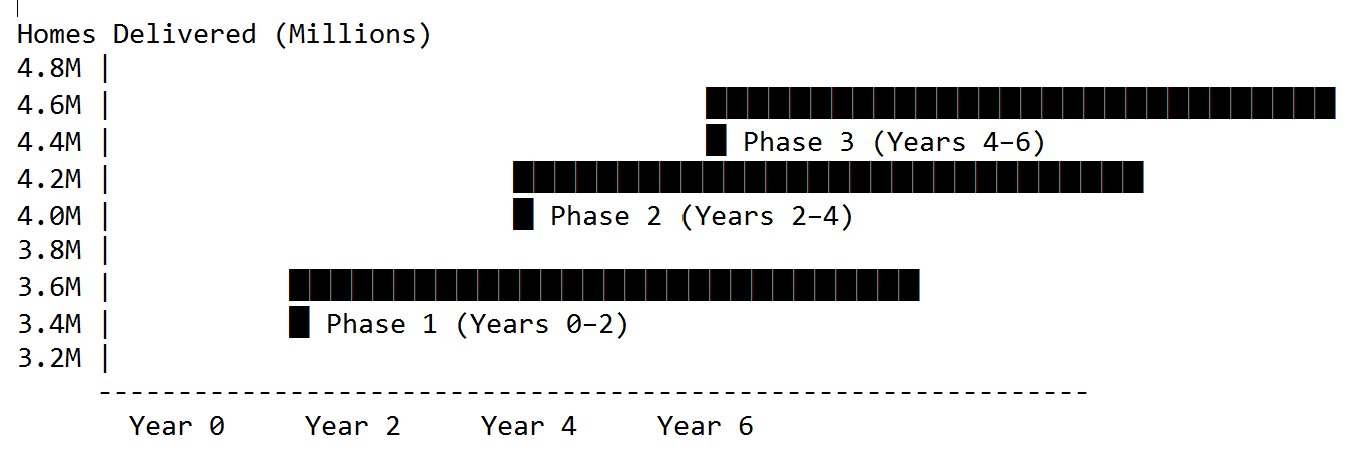
Phase 1 (Years 0–2): Capital Generation
Sale price: £202,200
Profit per home: £101,000
Homes delivered: 1.54 million
Purpose: Build capital reserves to fund future price reductions.
Phase 2 (Years 2–4): Price Moderation
Sale price: £150,000
Profit per home: £48,800
Homes delivered: 1.54 million
Purpose: Deliver affordable homes while maintaining programme sustainability.
Phase 3 (Years 4–6): Deep Affordability
Sale price: £125,000
Profit per home: £23,800
Homes delivered: 1.54 million
Purpose: Deliver genuinely low-cost homes and eliminate council waiting lists.
4. Total Output Over Six Years
= 4.62 million homes
This exceeds the UK’s current deficit and provides surplus capacity to stabilise the housing market.
5. Visual Summary (ASCII Charts)
5.1 Homes Delivered Over Time
5.2 Sale Price Reduction Over Time
6. Environmental Impact
Modular housing reduces carbon emissions through:
Factory-based construction (70–90% less waste)
Reduced transport emissions
High insulation standards
Compatibility with heat pumps and solar
Minimal land disturbance
This aligns with the UK’s net-zero commitments and reduces the carbon footprint of housing by up to 60% compared to traditional builds.
7. Governance Model
7.1 Not-for-profit delivery
Inspired by the
Climate Change Trust & Injustice Alliance, the programme operates on:
- Zero profit extraction
- Full reinvestment
- Transparent accounting
- Public benefit as the primary objective
7.2 National Housing Delivery Agency
Responsible for:
- Land acquisition
- Modular factory commissioning
- Quality assurance
- Coordination with councils
7.3 Local Authority Partnerships
Councils provide:
- Site identification
- Infrastructure planning
- Allocation of homes
- Community engagement
8. Why This Works
8.1 Predictable costs
Modular homes have stable, repeatable costs.
Land caps eliminate speculative inflation.
8.2 Speed
Homes can be erected in days, not months.
Factories operate year-round.
8.3 Scale
The model delivers 385,000 homes every six months.
8.4 Proven feasibility
The planning consultant who conceived this model has already demonstrated:
- Councils can be compelled to accept modular housing
- Appeals can be won
- Costs can be kept low
- Land can be used efficiently
This is not theoretical — it is tested.
9. Conclusion
This six-year national modular housing programme:
- Delivers 4.62 million homes
- Eliminates council waiting lists
- Reduces carbon emissions
- Stabilises the housing market
- Operates without profit extraction
- Is based on proven planning experience
- Uses land responsibly and affordably
- Creates a surplus of low-cost homes
It is a credible, scalable, environmentally responsible solution to the UK housing crisis.
....
FOREST
FIRES A TO Z
Amazonian
Arctic
Asia
Australian
Bolivian
Brazilian
British
Columbian
Canadian -
Saskatchewan
Chilean
Croatian
Ecuador
Europe heat
wave 17 July 2022
France
- Gironde,
Bordeaux July 2026
Greece
Japanese
Malaysian
Mongolian
Portugal
Russian
Spain
Sweden
USA -
California, Yosemite
- Montana
- Georgia
- Sacramento
UK
- Saddleworth Moor
- Moray
- Dartmoor
HEATWAVES
A TO Z
Australia
Barcelona
& Madrid, Spain
Bordeaux
& Brest France
Brazil
& Amazon rainforest
British
Columbia on the 1st of July 2021
China,
Beijing
India,
Delhi
London
had a similar experience in July 2022
Porto,
Portugal
Tokyo
& Osaka, Japan June 2022
USA
- Washington,
Spokane 2026
https://
....
Please use our
A-Z INDEX to
read more