HE FORGOTTEN POWERHOUSE: HOW A WORLD-CLASS HERTAGE SITE WAS OVERLOOKED IN THE RUSH FOR EXECUTUVE HOMES
By our investigate team
On the edge of the quiet East Sussex village of Herstmonceux, tucked behind hedgerows and ageing trees, sits a relic of Britain’s industrial ingenuity. It is not signposted. It does not appear on the parish council’s website. Most residents have never been told it exists.
Yet this unassuming brick building — the oldest surviving electricity generating station in Europe, complete with Victorian battery
load-levelling technology decades ahead of its time — should, by any reasonable measure, be a protected national treasure. Some experts argue it may even qualify for
UNESCO World Heritage status.
Instead, it has been quietly sidelined.
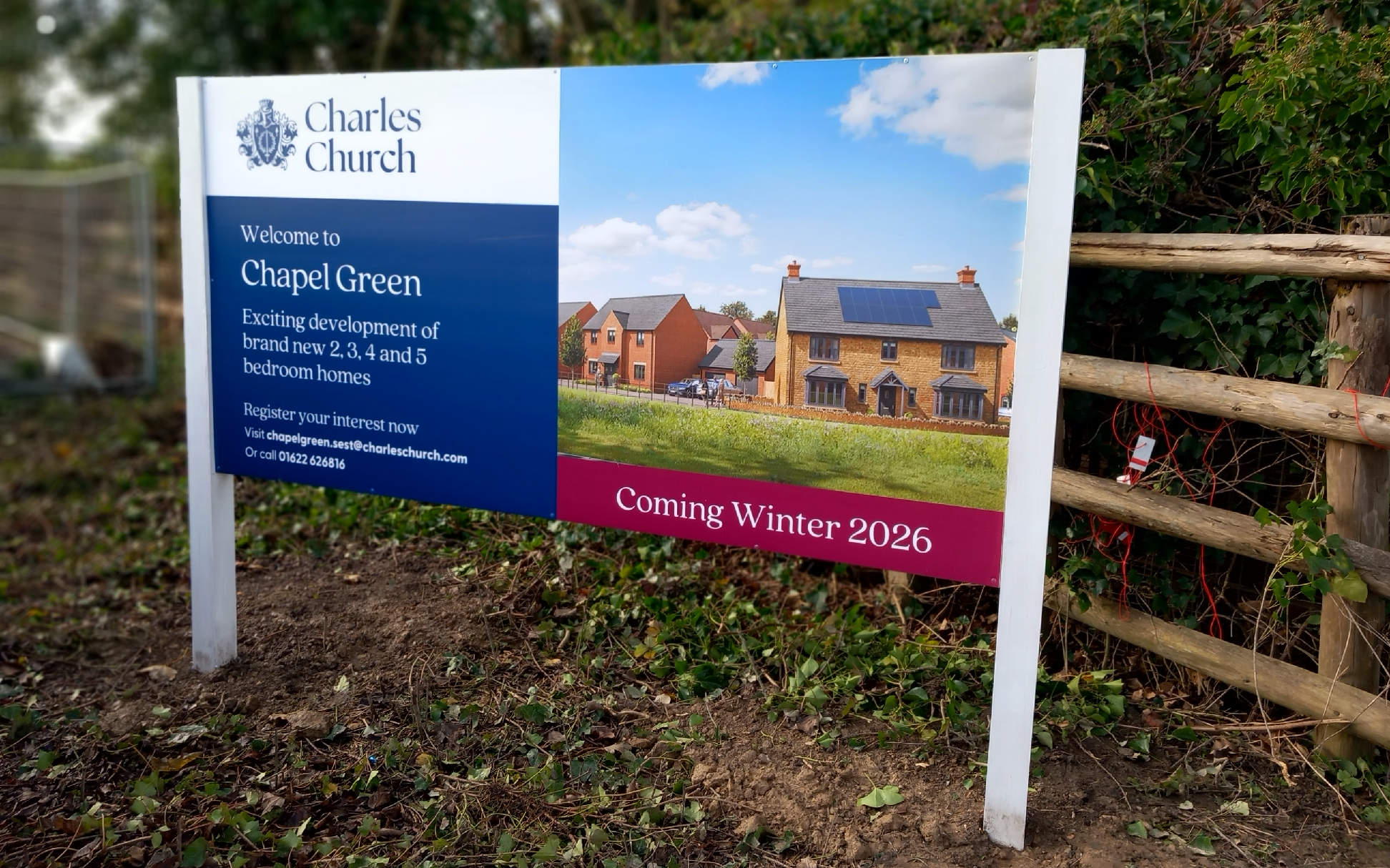
And in its place, a 70-home executive estate has risen on the greenfield that once fed the ancient well supplying the generating station. The development was approved by Wealden District Council despite
long-standing planning policies that normally prohibit building on such land unless it delivers
genuinely affordable housing, in exceptional circumstances. These homes do not.
To understand how this happened, you have to follow a trail of omissions, overlooked duties, and local connections that raise uncomfortable questions about how planning decisions are made — and whose interests they serve.
A HERITAGE ASSET HIDING IN PLAIN SIGHT
The generating station in Lime Park is the kind of site that heritage officers dream of: intact, historically significant, and technologically unique. It tells the story of early rural electrification, of Victorian engineering ambition, and of a community that once powered itself long before the
national grid existed.
Under normal circumstances, any development affecting such a site would trigger mandatory consultation with Historic England and the Department for Culture, Media and Sport. UNESCO’s UK committee would likely be informed. Archaeologists would be called in. Hydrologists would assess the ancient well.
None of that happened.
Wealden District Council approved the development without consulting the statutory heritage bodies. No heritage impact assessment was commissioned. No mention of the generating station appeared in the planning officer’s report. The parish council’s website — which lists local assets ranging from churches to bus shelters — makes no reference to it at all.
For a site of this calibre, the silence is deafening.
THE GREENFIELD THAT BECAME A GOLDMINE
The field chosen for development had long been considered unsuitable for housing. It lay outside the village boundary, on land that helped recharge the well feeding the generating station. Local plans designated it as countryside. Policies restricted development unless it delivered affordable homes.
Yet in 2015, the land was suddenly reimagined as a prime location for 70 executive houses
to be built by Clarion, or Persimmon and
Charles Church — some of the UK’s largest developers.
WHY THE CHANGE?
One explanation lies in the financial incentives. A development of this scale brings in:
- Significant Community Infrastructure Levy (CIL) payments
- Dozens of new council tax accounts in higher bands
- Long-term revenue streams for a cash-strapped district council
Self-build plots, by contrast, generate no CIL and typically fall into lower tax bands. Heritage protection generates no revenue at all.
In a district under financial pressure, the choice between a
heritage-led conservation zone and a lucrative executive estate is not a neutral one.
LOCAL CONNECTION AND UNCOMFORTABLE QUESTIONS
The land belonged to Tim Watson, a former auctioneer in Heathfield. Two
long-standing residents allege that he once worked with the chair of Wealden’s Area Plans South committee — the very committee that approved the development. Mr Watson is also said to be related to a parish councillor.
These are allegations, not proven facts. But they raise legitimate questions about transparency and conflicts of interest.
Under the Nolan Principles and the Localism Act, councillors must declare any personal or financial interests that could influence their decisions. Even the appearance of bias is enough to require recusal.
No such declarations were made.
To be clear: there is no evidence of wrongdoing. But the absence of transparency, combined with the extraordinary heritage omissions, has fuelled local suspicion.
A PATTERN, NOT AN ACCIDENT
What happened in
Herstmonceux is not an isolated anomaly. Across the country, councils under financial strain are increasingly dependent on developer contributions and council tax revenue. Heritage assets, especially those not yet formally listed, are often treated as obstacles rather than responsibilities.
In this case, the incentives aligned neatly:
- A greenfield site that could be transformed into a revenue-generating estate
- A heritage asset that, if properly acknowledged, would have blocked the development
- Local connections that eased the path
- A parish council that said nothing
- A district council that consulted no statutory heritage bodies
- A planning committee that approved the scheme despite policy barriers
The result is a development that should never have been approved under normal planning principles — and a heritage site left vulnerable, unprotected, and largely unknown.
THE COST OF SILENCE
The generating station still stands, but its context has been irrevocably altered. The ancient well that fed it has been disrupted. The greenfield buffer that once protected it is
set to become a cul-de-sac of executive homes. The opportunity to celebrate a
world-class industrial heritage asset has been lost — perhaps permanently.
For residents, the episode has become a symbol of something larger: a planning system where financial incentives outweigh cultural duty, where heritage is ignored when inconvenient, and where local connections can appear to smooth the path for development.
Whether or not any rules were broken, the public trust has been damaged.
And in the quiet of Lime Park, the old generating station — a monument to innovation — remains unlisted, uncelebrated, and almost forgotten.
.jpg)
Councillor Matthew Beaver
Hastings - Maze Hill and West St Leonards
Conservative -
Chair of Place Scrutiny Committee
.jpg)
Councillor Colin Belsey - Eastbourne - Ratton
Conservative -
Chair of HOSC
.jpg)
Councillor Nick Bennett - Arlington, East Hoathly and Hellingly
Conservative -
Deputy Leader and Lead Member for Resources and Climate Change
.jpg)
Councillor Bob Bowdler - Wealden East - Conservative
Lead Member for Children and Families
.jpg)
Councillor Charles Clark - Bexhill East - Independent
.jpg)
Councillor Chris Collier - Peacehaven
Labour
Leader of the Labour Group
.jpg)
Councillor Anne Cross - Heathfield and Mayfield
- Green Party
.jpg)
Councillor Godfrey Daniel - Hastings - Braybrooke and Castle
- Labour
.jpg)
Councillor Johnny Denis - Ringmer and Lewes Bridge
Green Party -
Leader of the Green Party Group
.jpg)
Councillor Penny di Cara - Eastbourne - Sovereign
- Conservative
Lead Member for Economy
.jpg)
Councillor Chris Dowling - Uckfield South with Framfield
- Conservative
.jpg)
Councillor Claire Dowling - Uckfield North - Conservative
Lead Member for Transport and Environment
.jpg)
Councillor Kathryn Field - Battle and Crowhurst
Liberal Democrats
- Deputy Leader of the Liberal Democrat Group
.jpg)
Councillor Aidan Fisher - Hastings - Ashdown and Conquest - Reform UK
.jpg)
Councillor Gerard Fox - Hailsham New Town
- Conservative
.jpg)
Councillor Roy Galley - Maresfield and Buxted
Conservative -
Chairman of the County Council
.jpg)
Councillor Nuala Geary - Bexhill West
- Conservative
.jpg)
Councillor Keith Glazier OBE - Rye and Eastern Rother
- Conservative
Leader of the Council and Leader of the Conservative Group
.jpg)
Councillor Alan Hay - Hastings - Baird and Ore
- Conservative
.jpg)
Councillor Julia Hilton - Hastings - Old Hastings and Tressell -
Green Party
.jpg)
Councillor Ian Hollidge - Bexhill South -
Conservative
.jpg)
Councillor Stephen Holt - Eastbourne - Devonshire
- Liberal Democrats
.jpg)
Councillor Johanna Howell - Crowborough North and Jarvis Brook
Conservative -
Chair of People Scrutiny Committee
.jpg)
Councillor Eleanor Kirby-Green - Rother North West
- Conservative
.jpg)
Councillor Carolyn Lambert - Seaford South - Liberal Democrats
.jpg)
Councillor Tom Liddiard - Pevensey and Stone Cross
- Conservative
.jpg)
Councillor Philip Lunn - Crowborough South and St Johns
- Conservative
.jpg)
Councillor James MacCleary - Newhaven and Bishopstone
- Liberal Democrats
.jpg)
Councillor Wendy Maples - Lewes - Green Party
.jpg)
Councillor Sorrell Marlow-Eastwood
Hastings - St Helens and Silverhill
- Conservative
.jpg)
Councillor Carl Maynard - Brede Valley and Marsham
Conservative -
Lead Member for Adult Social Care and Health
.jpg)
Councillor Matthew Milligan - Chailey - Conservative
.jpg)
Councillor Steve Murphy - Hailsham Market
- Liberal Democrats
.jpg)
Councillor Sarah Osborne - Ouse Valley West and Downs
- Liberal Democrats
.jpg)
Councillor Paul Redstone - Northern Rother
- Conservative
.jpg)
Councillor Christine Robinson - Telscombe - Labour
Deputy Leader of the Labour Group
.jpg)
Councillor Pat Rodohan - Eastbourne - Upperton - Liberal Democrats
.jpg)
Councillor Phil Scott - Hastings - Hollington and Wishing Tree -
Labour
.jpg)
Councillor Daniel Shing - Polegate and Watermill - Independent Democrats
.jpg)
Councillor Stephen Shing - Willingdon and South Downs
- Independent Democrats
Leader of the Independent Democrats Group
.jpg)
Councillor Alan Shuttleworth - Eastbourne - Langney
- Liberal Democrats
.jpg)
Councillor Bob Standley - Wealden North East -
Conservative
Lead Member for Education and Inclusion, Special Educational Needs and Disability
.jpg)
Councillor Colin Swansborough - Eastbourne - Hampden Park
Liberal Democrats
- Chair of Audit Committee
.jpg)
Councillor Georgia Taylor - Forest Row and Groombridge
Green Party
- Deputy Leader of the Green Party Group
.jpg)
Councillor David Tutt - Eastbourne - St Anthony's
Liberal Democrats
- Leader of the Liberal Democrat Group
.jpg)
Councillor John Ungar - Eastbourne - Old Town - Liberal Democrats
.jpg)
Councillor Trevor Webb - Hastings - Central St Leonards and Gensing
- Labour
.jpg)
Councillor Brett Wright - Eastbourne - Meads - Liberal Democrats
REGISTRATION OF MEMBER'S INTERESTS
1. Subject to paragraph 14, you must, within 28 days of—
a) this Code being adopted by or applied to your authority; or
b) your election or appointment to office (where that is later), register in your authority’s register of members’ interests (maintained under section 81(1) of the Local Government Act 2000) details of your personal interests where they fall within a category mentioned in paragraph 1(a) under personal interests, by providing written notification to your authority’s monitoring officer.
2. Subject to paragraph 14, you must, within 28 days of becoming aware of any new personal interest or change to any personal interest registered under paragraph 1, register details of that new personal interest or change by providing written notification to your authority’s monitoring officer.
SENSITIVE INFORMATION
1. Where you consider that the information relating to any of your personal interests is sensitive information, and your authority’s monitoring officer agrees, you need not include that information when registering that interest, or, as the case may be, a change to that interest under paragraph ‘registration of members’ interests’.
2. You must, within 28 days of becoming aware of any change of circumstances which means that information excluded under paragraph 1 is no longer sensitive information, notify your authority’s monitoring officer asking that the information be included in your authority’s register of members’ interests.
3. In this Code, “sensitive information” means information whose availability for inspection by the public creates, or is likely to create, a serious risk that you or a person who lives with you may be subjected to violence or intimidation.
ANNEXURE – THE TEN GENERAL PRINCIPLES - CODES OF CONDUCT
1. Selflessness – Members should serve only the public interest and should never improperly confer an advantage or disadvantage on any person.
2. Honesty and integrity – Members should not place themselves in situations where their honesty and integrity may be questioned, should not behave improperly and should on all occasions avoid the appearance of such behaviour.
3. Objectivity – Members should make decisions on merit, including when making appointments, awarding contracts, or recommending individuals for rewards or benefits.
4. Accountability – Members should be accountable to the public for their actions and the manner in which they carry out their responsibilities, and should co-operate fully and honestly with any scrutiny appropriate to their particular office.
5. Openness – Members should be as open as possible about their actions and those of their authority, and should be prepared to give reasons for those actions.
6. Personal judgement – Members may take account of the views of others, including their political groups, but should reach their own conclusions on the issues before them and act in accordance with those conclusions.
7. Respect for others – Members should promote equality by not discriminating unlawfully against any person, and by treating people with respect, regardless of their race, age, religion, gender, sexual orientation or disability. They should respect the impartiality and integrity of the authority’s statutory officers, and its other employees.
8. Duty to uphold the law – Members should uphold the law and, on all occasions, act in accordance with the trust that the public is entitled to place in them.
9. Stewardship – Members should do whatever they are able to do to ensure that their authorities use their resources prudently and in accordance with the law.
10. Leadership – Members should promote and support these principles by leadership, and by example, and should act in a way that secures or preserves public confidence.
See
the: Planning and Infrastructure Act 2025, enacted on the 18th December
2025.
If you have information relating to any of these allegations of
impropriety, you can write in confidence to the:
Domestic Corruption Unit
Economic Crime
Directorate
City of London Police Guildhall
Yard
London, EC2V
5A